Exploring the Vale of Belvoir

Local cyclists will need no introduction to the Vale of Belvoir (pronounced beaver).

The vale is a hidden gem, which is part of its charm, as it is largely passed by in the rush for the more recognised ‘honeypot’ areas of the country.

Make up your own routes around the vale – or check out this useful site with information about the Vale of Belvoir, including tearooms & cafes: Visit Belvoir.

Scenic Backdrops and Terrain

The escarpment of the Belvoir Edge and the Nottinghamshire Wolds border the vale to the south. This provides a wonderful, often wooded backdrop – if you want hills – we’ve got ’em!

If the thought of hills is enough to keep you under the duvet – fear not! The bulk of the vale is level – and for those who like their cycling dead flat – I introduce you to the Grantham Canal towpath!
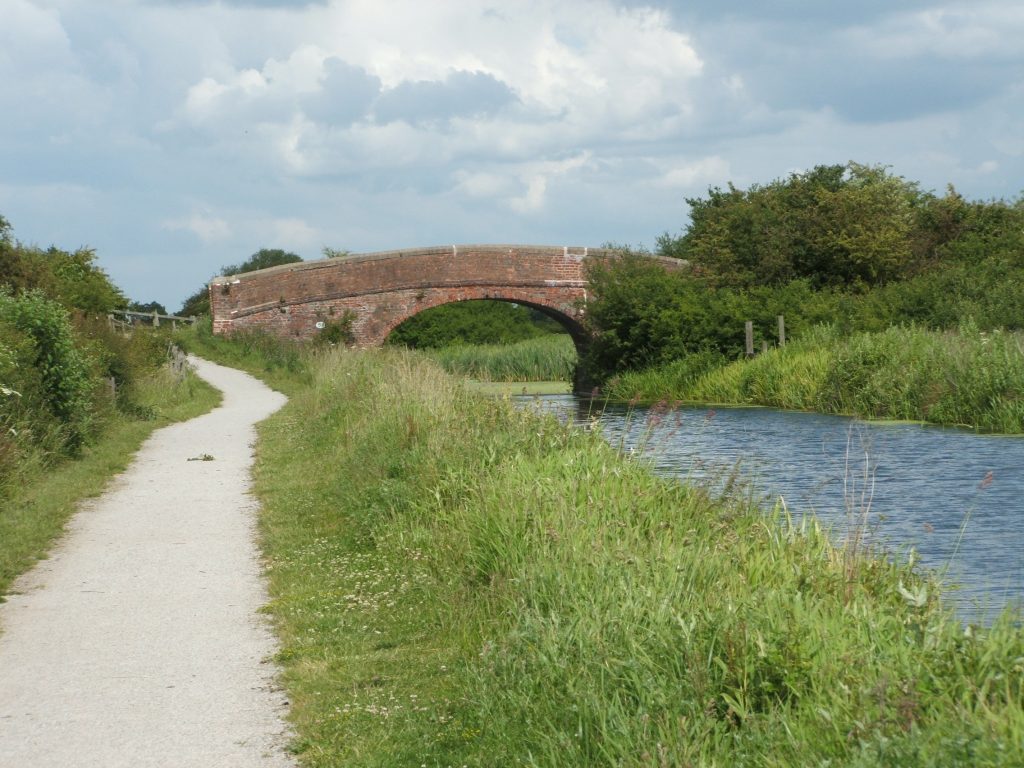
Longore Bridge
Longore Bridge – Rural Isolation
A Wayside Seat Near Muston, with Views to Belvoir Castle

Grantham Canal Towpath

Overview of the Route

33 miles of sheer delight, with perhaps the two extreme ends not being of interest if you’re out for a day’s cycling in the countryside.

Of this 33 miles of towpath – around 22 miles have a crushed stone surface – the remainder being grass. The grass section is (largely) between Harby and Woolsthorpe by Belvoir, and was left in grass, due to these areas being designated Sites of Special Scientific Interest (SSSI).

Route Adjustments and Sustrans Route 15

Check out Sustrans National Cycle Network Route 15. This is particularly useful where it runs parallel with the canal near Woolsthorpe – signposted off the towpath between Locks 17 and 18. This alleviates using the often muddy section of towpath between Lock 15 and 16. There is extensive restoration work in progress along this section (currently the towpath is fully open here 2021. It may be 2 years before we begin the restoration of Lock 13).

Surface Conditions & Cycling Tips

Grass Sections and Weather Considerations

The grass sections are usually rideable – perhaps better avoided in very wet weather. Some, in their 4th flush of youth, and no longer racing fit, have found these long stretches of grass a little tiring – please consider this if you’re doing an end to end.

Hedge Cutting and Puncture Warnings

A timely note here about hedge cutting. Hedges are predominately Hawthorn and Blackthorn – as cyclists, it’s the last syllable of these two words which will be of interest – thorns mean punctures!

Hedges do have to be trimmed. This needs to be done out of the birds nesting season through the autumn and winter. Contractors working for the Canal and River Trust do this work, usually doing a great job in blowing clear the thorns from surfaced towpaths – stay on the surfaced portion!

Always be aware of a few stray thorns which get scratched back on by dogs and birds! Clearing grass sections of thorns is not realistically possible. Cycling on these sections during and for some time after hedge cutting invariably increases the risk of punctures – try to ride where others have gone before. Sorry to dwell on this – we’ve had letters.

Approaching Lock 13, under a wide blue sky
Sheer delight – autumn on the summit level, emerging from Harlaxton cutting

Grantham Canal Cycle Route 15m (24km)

The cycle route, mainly along quiet country roads, takes in three villages situated on the edge of the Vale of Belvoir and also a long stretch along the Grantham canal towpath. Although the route can be started at a number of diferent locations, the description for the ride starts at Hickling canal basin.

Hickling → Long Clawson Bridge

From Hickling Basin, go through the two small hand gates onto the towpath heading eastwards. Care must be taken when cycling on the towpath, for although it is wide enough to cycle along in safety, please slow down when walkers are met and do not cycle too near the canal edge. Continue along the towpath until the brick built Clark’s Bridge is reached. Please dismount to go under the bridge as the towpath narrows quite considerably. Go on until Long Clawson Bridge and up the access track to the road.

Long Clawson Bridge → Colston Bassett

Turn Left onto the road and follow this quiet country lane for about 3km to the T junction onto Harby Lane. The Nottinghamshire and Leistershire County boundary goes along this road for a short section. Look out for roadside nature reserve markers on both sides of the road indicating a special mowing regime of the grass verges to encourage native wild flowers. Some of the more recognisable species include Medow Sweet, Yellow Rattle, Lady’s Bedstraw and Rest Harrow. Turn left at the T junction and follow the road into Colston Bassett, passing the Stilton Dairy on the left hand side of the road at the start of the village.

Colston Bassett → Mackley’s Bridge

Continue along the main road through the village passing the village church, the Martin’s Arms pub and finally, Colston Bassett Hall. Turn left at the next junction (signposted Owthorpe and Kinoulton) and after 1km, the road crosses over the canal at Spencer’s Bridge. Just after the bridge is Oddhouse Farm with its date built into the brickwork. Turn left at the crossroads and go down the road that heads south to Mackley’s Bridge – another canal crossing.

Mackley’s Bridge → Hickling

From the bridge, continue along the road to Kinoulton. Look out for the line of poplar trees that lead up to the canal at Irish Jack’s Bridge. Carry straight on at the Kinoulton crossroads passing the Nevile Arms on the right hand side. The route continues along the Hickling road leading back to Hickling Basin at the start of the ride.

Resources for Cyclists

Grantham Canal Guide

The ‘Grantham Canal Guide’ is an excellent companion to cycling along the towpath – it indicates the type of surface you’ll encounter – along with a wealth of information about the canal and surrounding area – cafes, pubs and restaurants too! Also see the link at the bottom of the page for places where refreshment can be found.

Order Your Guide Book Here

Route Planning

I firmly believe lying the OS map out on the floor at home to plan your route is best. The choices of cycling routes are almost endless, most of the lanes are light in traffic. Many of the green lanes and tracks are passable, and are useful when planning your route.

Essentials to Bring

Don’t forget your puncture repair outfit/spare tube!

Towpath Code

Please be considerate to other towpath users – slow right down when passing people walking. Please also take care when cycling under bridges, every year we hear of cyclists falling in – it does happen! See Towpath Code

Useful Links

Safety Notes: Road Crossings & Barriers

Road Crossings Requiring Extra Care

A52 Lings Bar, near Gamston, Nottingham
The canal and towpath have been severed here by this very busy road – it is not safe to cross by the more direct (and seemingly obvious) route across this dual carriageway, which also involves scaling the crash barrier on the central reservation. There is a light controlled crossing approx 400m away.

Bottesford Bridge (Bridge 55)
This bridge was rebuilt some years ago – without providing the towpath under. It’s a little awkward squeezing a bike through the opening to gain access to the road, i.e. panniers may have to be removed. Sight lines aren’t great here for crossing the road. Fortunately, traffic is fairly light.

Chicane-Type Barriers at Access Points

Chicane type barriers are installed at many of the access points. These are to help prevent motorcycles from using the towpath. These barriers will not be a problem for most users. Even bicycles with trailers can usually negotiate them without unhitching. Tandems may have to be lifted over the barrier.

If no rear mudguard is fitted – the usual trick is to rear the bike up and wheel it around the barrier on its rear wheel. This is often easier with solo bikes too! These barriers will gradually be replaced with ‘K’ type ones (which are actually more the shape of a capital letter ‘A’ – but this will be over a period of some years. In some instances the barriers may be removed completely.

Access Issue at Bridge 37, Clawson Lane

This bridge has been lowered in the past, leaving a height above the towpath of approx. 3 feet. To continue along the towpath here has traditionally been through private property. During the pandemic, this access has been denied. Please respect the landowner’s right to do this. An alternative route will need to be found, avoiding this bridge. The Canal and River Trust are in communication with the landowner. Let’s hope a solution can be found.

Leave a Reply

Your email address will not be published. Required fields are marked *